

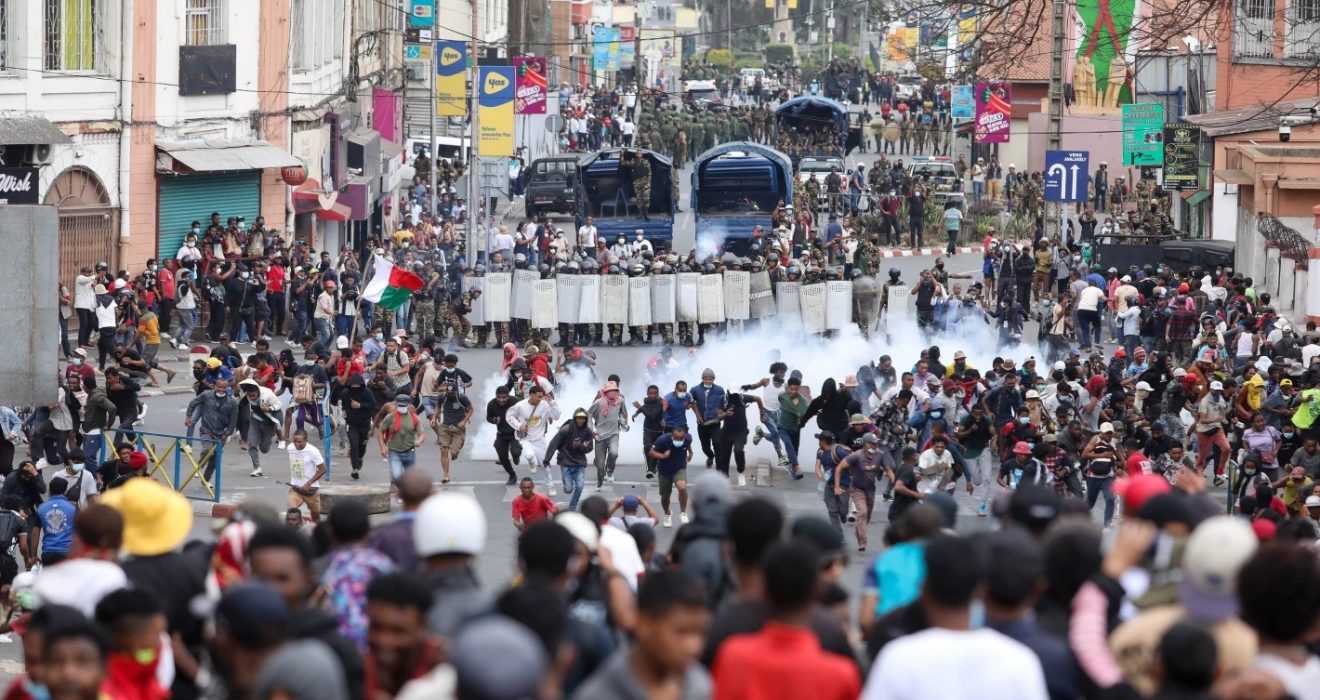
Madagascar today is facing a crisis that goes beyond power outages and dry taps. It is a crisis of national security. For decades, citizens have endured prolonged energy shortages and water scarcity. In 2018, promises of reform raised hopes, but the situation has only worsened. Today, 19 million out of approximately 32 million Malagasy people live without access to electricity, and even in urban centers, power and water are erratic. Hotels schedule water heaters, industries limp under the weight of unreliable energy, and livelihoods collapse where water fails. What should be basic services for survival and dignity have become daily battles and, in turn, a trigger for unrest.
Across the country, citizens are protesting, not just for electricity and clean water, but for economic development and peace for their survival. But when young people, students, and workers marched peacefully to demand accountability, they were met with tear gas, rubber bullets, and live ammunition. Yet the voices of Madagascar’s Gen-Z echo beyond its borders. Across Africa and the Global South, youth are refusing to accept inherited “tags” such as power deficits, weak infrastructure, unemployment, and endless promises. Instead, they are demanding systemic shifts to safeguard their future, even at the risk of their lives. The United Nations has reported that since the protests began in September 2025, at least 22 people have been killed and more than 100 injured. Energy and water insecurity are not technical issues; they are existential. They define whether a community can thrive or descend into chaos.
This is why the pathway forward must move beyond political reshuffling. It requires practical, people-centered solutions that secure livelihoods while restoring trust. Distributed Energy Resources (DERs) and microgrids, such as those advanced by the RePower project with the Green Africa Youth Organization (GAYO), point the way. Through the RePower project, GAYO is supporting a community-based microgrid demonstration in Ambararatabe, serving a population of about 6,500 people. Currently, most residents rely on solar torches or small lamps for light, with no access to stable electricity. The RePower system introduces two Solartainers (49 kWp PV and 116 kWh/100 kW BESS), a biomass combined heat and power unit (BCHP) with 80 kWe electrical and 107 kWth thermal output, and additional infrastructure for productive uses of energy (PUE), including one Cooltainer, 30 solar water pumps, 40 solar streetlights, and water purification systems. These systems are designed not only to power homes and public institutions such as hospitals but also to support small enterprises and strengthen livelihoods in key areas like rice farming and welding, creating opportunities for local value addition and sustainable community development.
Madagascar’s story is a warning: when energy and water fail, peace falters. But it is also a call to action. Africa’s youth are not only resisting failure, but they are also reimagining systems, pushing for radical just transitions that transform scarcity into resilience and despair into dignity. If given the space and support, they can make Africa not a continent of unfulfilled promises, but a beacon of innovation and justice.
Energy poverty and water insecurity are development challenges, just as they are direct threats to national security. Left unaddressed, they fuel instability and unrest, as we see unfolding in Madagascar. Today, with the declining costs of solar PV and battery storage systems, DERs offer a practical and urgent solution to Africa’s twin crises of energy and water, which are inextricably linked.
African-led organizations like GAYO, in partnership with BlueNova, Africa GreenTec, the University of Nairobi, and others, are already working in Madagascar and other energy-stressed regions to shift this narrative, integrating microgrids with renewable energy, storage, and water systems to safeguard livelihoods. We call on partners and the donor community to join forces in scaling these solutions, turning innovation into impact and action into resilience. The people close to the problem are the same as the solutions to address it.
Rise African Youth for Energy Sovereignty. An energy sovereign future that supports our innovation, industrialization, and leadership over our own resources. It is time to redefine ‘Africa’s Tomorrow’ and shed the old tags that have limited our potential. This moment belongs to us, the generation whose voices, creativity, and courage are reshaping the course of Africa’s development.
Author: Efua Nyamekye Appiah (GAYO), Image source: The Associated Press