

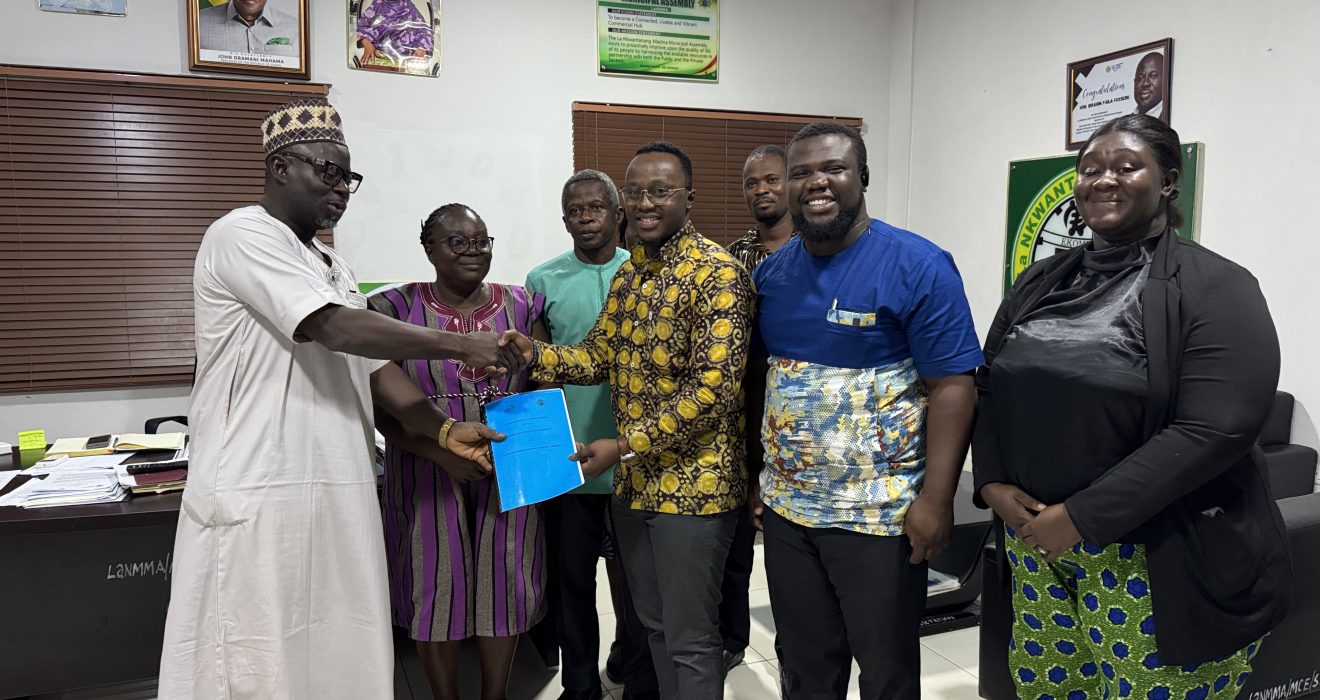
In the La-Nkwantanang Madina Municipal Assembly (LANMMA), waste is evolving from a burden to a transformation. On 11th March 2026, GAYO and LANNMA formalised a partnership through a Memorandum of Understanding (MoU) to establish a Material Recovery Facility.
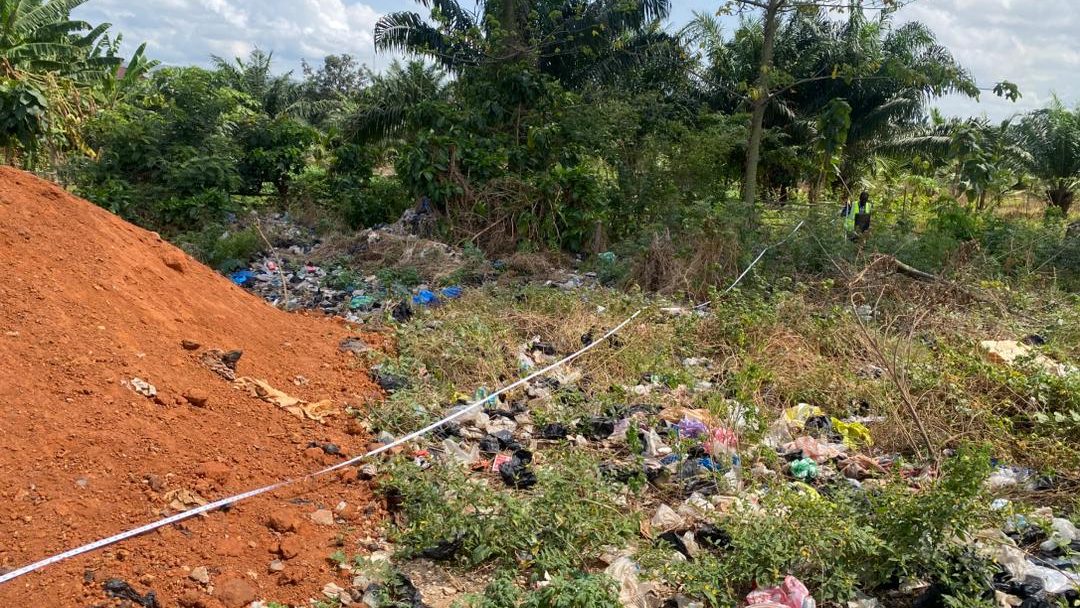
LANMMA is one of Ghana’s fastest-growing urban municipalities, and with rapid growth comes pressure: on roads, infrastructure and most visibly, on waste. Every day, tonnes of household, commercial, and organic waste flow toward an already overwhelmed landfill, leaving untapped value trapped between collection and disposal.
The challenge is both logistical, economic and environmental. Organic waste rotting in open landfills generates methane, a greenhouse gas more than 80 times as potent as CO₂ over a 20-year period. Recyclables that could fuel small businesses are buried. And informal waste workers who are often the most vulnerable labour without structure, income security, or safety.
Speaking to GAYO, Hon. Ibrahim Faila Fuseini, the Municipal Chief Executive (MCE) for LANMMA explained, “We have a challenge with the final disposal at the landfill. Having GAYO come in to help reuse, recycle, and segregate some waste will help reduce the total volume that reaches the landfill.”
The Solution: Infrastructure for a Circular Economy
The MRF is designed as the nerve centre of a community-led circular economy. A place where waste arrives as a resource to be transformed. The facility will support waste sorting, processing, and redistribution to local SMEs and green businesses who use recovered materials as inputs for composting, recycling, upcycling, and urban agriculture.
But the innovation starts long before waste reaches the MRF gates. GAYO’s signature approach is source separation with incentives, a model that has already proven itself in multiple Ghanaian municipalities. Households and businesses sort their waste before collection. Mr. Jacob Johnson Attakpah, Director of Zero Waste at GAYO indicated that there would be no tipping fee at the MRF, removing any financial barrier to participation. Pre-sorted, cleaner materials then unlock better processing; composting, plastic recovery, textile upcycling, and metal reclamation all become economically viable. Recovered materials flow onward to local SMEs as affordable raw inputs, seeding a new generation of green enterprises across the municipality and fostering a local economy around waste.
“What GAYO is going to do is run an incentive-based system to encourage separation of waste at source. The incentive is simple, when you bring your waste to the MRF, there is no tipping fee. This reduces pressure at the dumpsite while giving SMEs and sustainable businesses access to waste as a raw material for innovation in composting and recycling.”
Green Jobs: Building Madina’s Green Workforce
Across the municipalities where GAYO already operates, the evidence is clear: a well-structured waste economy does not just clean streets, it creates dignified, sustainable livelihoods. To date, GAYO has diverted over 400 tonnes of plastic, metal, organic, and textile waste, generated more than 1,000 direct green jobs, and empowered over 5,000 youth through green business development programmes.
GAYO’s model includes the formalisation of informal waste workers through unionisation, community engagement structures, and capacity-building in green business development. Young people and informal workers have entered the green value chain as plastic recyclers, composters, textile upcyclers, and urban gardeners roles that did not exist before GAYO arrived.
In La-Nkwantanang Madina, the same model will take root, and the Assembly has committed to making it work.“Some partnerships come with both merits and demerits. But we believe the merits of this partnership are bigger. We, as the Assembly, will support you by creating an enabling environment and you can provide jobs for our people, train them in waste management, and help empower locals economically.” , Hon. Fuseini added
Years from now, Madina should have a diverse ecosystem of green businesses from composting enterprises supplying urban farms, to plastic recyclers feeding local manufacturing, to upcycling studios turning textile waste into new products. Each one is traceable back to the MRF and to the community’s decision to take ownership of its waste.
Every Tonne Diverted Is a Climate Win
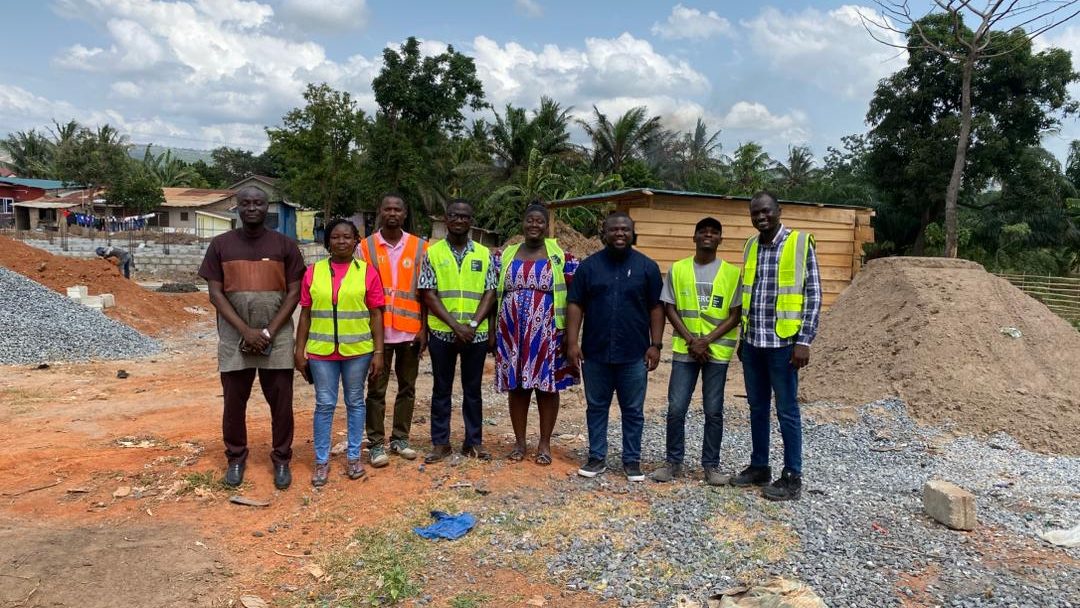
Organic waste buried in landfills decomposes without oxygen, producing methane — one of the most potent greenhouse gases on the planet. By intercepting organic waste at the MRF for composting, GAYO’s model doesn’t just clean up Madina. It actively reduces Ghana’s climate footprint. Composted organic waste returns to the soil as a carbon store and a natural fertiliser, closing the nutrient loop and supporting urban food security. This is zero waste working as climate action — measurable, local, and community-owned.
The signing of the MoU is a beginning. What follows is implementation, and GAYO brings to Madina a proven playbook refined across multiple municipalities.
In the coming months, residents and businesses across La-Nkwantanang Madina will begin engaging with GAYO’s incentive-based separation programme. Community structures, including informal waste worker groups and youth organisations will be brought into the value chain with training, tools, and pathways to formalisation.
The MRF, once established, will become a hub: a place of employment, of learning, of innovation, and of environmental accountability. Municipal landfill volumes will begin to fall. Methane emissions will decline. And gradually, Madina’s relationship with its own waste will shift from burden to resource, from pollution to production.